Some years ago, I was sitting at a picnic table, outside the staff lunchroom at our dying local newspaper, watching the kids from the on-site staff daycare. It was a lovely spring day, on a bluff overlooking the freeway. Two daycare workers were taking the kids for a walk. Each worker held one end of a thick yellow rope, to which clung a dozen tiny fists. The Yellow Daycare Rope. Two dozen tiny heads swiveled anxiously, surveying the world. My first thought was: “My kids would never stick to that rope – too confident – they’d run off in a flash.”
Then suddenly I remembered a simple scene from the old television series, Little House on the Prairie, set in the 1870s American Midwest. The little daughter of the pioneer Ingalls family, all dressed up in petticoats, was running cheerfully, fearlessly out into the open prairie, with nothing but the long grass between her and the far horizon. Versus the Yellow Daycare Rope. And I knew that we’re no longer in the Homesteaders’ World. But where are we?
A year later, my dad died in the typically “Canadian way”: public medical care rationed by waiting lists. He was diagnosed with bladder cancer early the previous summer, and he was scheduled for surgery in the earliest available operating room – in October. By the time the surgeon got to him, four months later, the cancer had spread to his spleen. In January, when his pain was unbearable, he was re-admitted to hospital after fourteen agonizing hours, sitting upright on a straight-backed chair in the hospital waiting room. Five days later, he was dead.
Dad had had a good life, and he had a good death, surrounded by his five grown kids, their spouses and eight or ten grandkids. If he had been a forty-something sole provider for his family, he might have been bumped up the operating room queue. But he wasn’t. He was an old man, and he settled for the Canadian norm, equality of delayed care: months waiting with life-threatening diseases, or more than a year for “quality of life” surgery like hips or knees.
When we first learned about the wait-time, shortly after Dad was diagnosed, we all suggested that he fly south to the States. It might cost as much as a new car, but he could certainly afford a quick operation at a Mayo Clinic. Yet somehow… the private option just didn’t seem right to him. It didn’t seem fair. It seemed… unCanadian.
When I returned to work, after Dad’s funeral, I ran into coworkers who’d also lost family members to the public system, equally frustrated that their loved ones hadn’t grabbed the private option. It might cost as much as a Caribbean cruise, maybe, but less than their death. Ninety percent of Canadians live within 200 miles of the US border, and most buy a new car at some time in their lives, yet less than a quarter of one percent of Canadians will pay to go south for medical care. That spurred my question. Are we no longer independent enough or self-reliant enough, even to seize at our own survival?
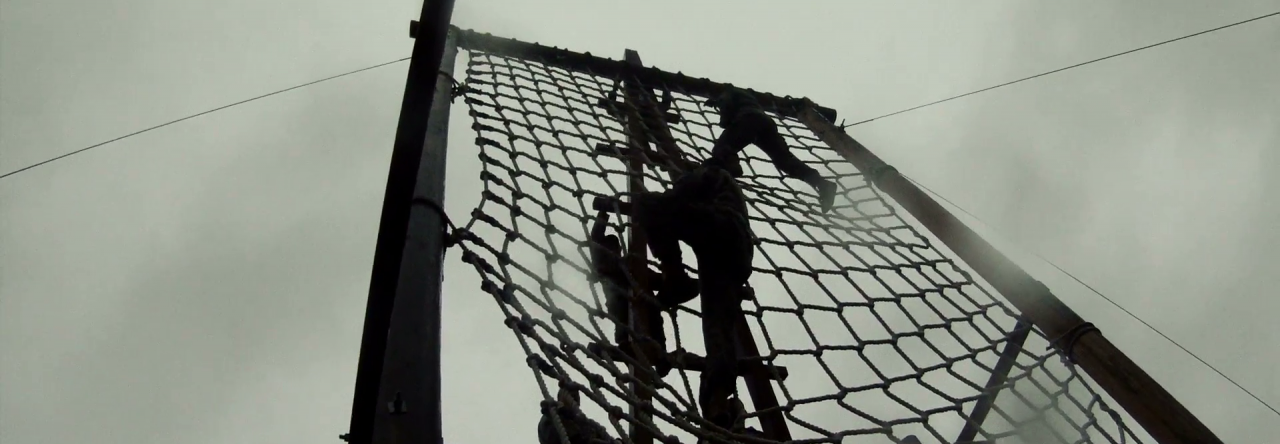
If we no longer live in the Homesteaders’ World, then where are we? We need to think this through. We live in world of new problems, and we are using old solutions. We no longer build our own lives in the predictable world of Nature, under the prairie skies. When Granddad set out on a trip, he checked the buggy, the weather and the picnic basket. Today we check our airline schedule, credit cards and especially our passports. We all now live Under the Net – beneath a dense web of laws, regulations, applications, costs, benefits, threats and distractions of the Homogenous, Universal and Managerial Administration – the HUMA or “Hoo-Ma.”
My reflections here are not a rant. After 45 years working in academics, journalism and government, I believe we need for practical diagnosis, prescription and prognosis. The Modern World is a fact, and complaining won’t help. Under the Net is where we must live and strive to flourish. If we live with the expectations of frontiersmen, we will become entangled in the Net and maybe even shackled. The frontiersman was confident in digging his own well, but watched stoically while his kids died from smallpox. Today, we are confident our kids will survive to adulthood, but we get our water only through a bureaucracy. Under the Net.
In Granddad’s day, kids went hungry. Today, paradoxically, they go lonely. The “social safety net,” like a Yellow Daycare Rope, breeds a culture of isolation, anxiety and docility. We must strive to understand this. It creates expectations of entitlements and rights that it cannot satisfy. And barring a self-inflicted demographic catastrophe, the HUMA will inevitably consume all the surplus wealth and enterprise of the society feeding it.
So these conversations fall into three types: (1) Learning simply to see the HUMA’s unquestioned lunacies and hidden impotence; (2) Dealing with public administration as normal citizens; and (3) Understanding the Public Service culture from the inside, in order to see how it victimizes its own employees, and how its growth threatens our economy and civilization.
Some will insist that the Homogenous, Universal and Managerial Administration is evil, even demonic. But it was inevitable. Ever since Neolithic times, human ingenuity has enhanced human survival, generated population growth and accrued technological progress. This is good. However, around the year 1900 AD, for the first time in history, a majority of people began living in cities. This is both bad and good. Our kids survive to adulthood, and that’s good. We now live in a state of artificial nervous tension and habitual cultural hysteria, and that’s bad.
The HUMA has made everything seem administrate-able, coddling dependent City Mice in chichi condominiums, and panicking self-reliant Country Mice in their farms, acreages and suburbs. Yet, if we try to flee it and live as homesteaders, we turn into survivalists, with all that entails. We can survive as homesteaders. On the other hand, it really is possible to flourish Under the Net – providing we see the insanities. We aren’t in Kansas anymore.
-30-
 UNDER-THE-NET